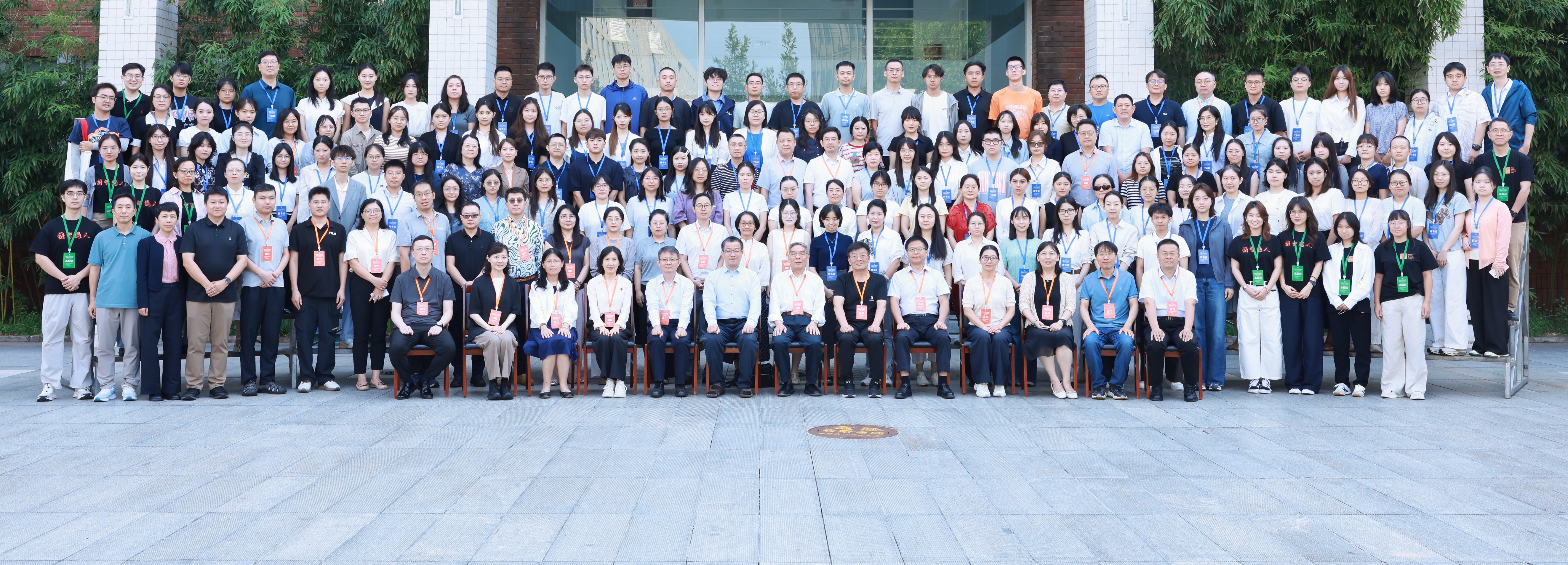
2025第二届基于语料库的跨学科前沿研究国际会议在西安交大召开
2025年11月14日至16日,由西安交通大学外国语学院、中国英汉语比较研究会语料库语言学专业委员会主办,《外语教学》《西安外国语大学学报》编辑部协办的第二届“基于语料库的跨学科前沿研究国际会议”在西安交通大学举行。会议聚焦“AI时代语料库的跨学科融合”,吸引了来自英国、美国、日本、德国、法国、新西兰、马来西亚等国家及国内高校近200位师生参会。
15日,会议开幕式举行。西安交通大学党委副书记孙早,英国兰卡斯特大学杰出教授Tony McEnery出席并致辞。开幕式由西安交大外国语学院院长陈向京主持。
孙早代表学校欢迎海内外专家学者参会。他表示,信息技术发展不断拓展科技创新与语言研究交叉融合的新方向,希望与会学者积极推进人工智能与语料库建设、语言教学、语言数据统计、社会科学及翻译学等领域的跨学科研究,助力新文科建设。
Tony McEnery表示,近五年语料库发展变化具有革命性意义,特别是AI技术为知识探索和语料库工具应用开辟了新可能。国际学界应加强跨学科交流合作,进一步深化中英学者对话,共同推动语料库等领域发展。
会议期间设置工作坊、主旨报告和平行分论坛等环节,围绕AI时代语料库建设及跨学科研究展开讨论。14日下午,会前工作坊举行。英国兰卡斯特大学Paul Rayson教授、Vaclav Brezina教授、Paul Baker教授分别围绕多语种语义标注、数据驱动学习及患者反馈中的性别差异等主题与参会者交流。当晚,早稻田大学Laurence Anthony教授在线介绍了语料库方法与AI融合实践,并演示了个人AI模型相关实操。
主旨报告环节中,Tony McEnery介绍了生成式人工智能在应用语言学中的最新应用;Vaclav Brezina探讨了AI对传统语言研究的挑战及其与语料库研究融合的潜力;北京航空航天大学梁茂成教授提出基于大语言模型构建自动化系统KWICWise,以提升语料库研究效率与可扩展性;西安外国语大学黄立波教授利用机器学习分析《四世同堂》原文及回译本风格,为计算文体学和翻译研究提供新思路。
上海外国语大学胡开宝教授通过比较《大浴女》《笨花》的创作风格,展示语料库在文学风格研究中的应用价值;德国埃尔朗根—纽伦堡大学Michaela Mahlberg教授提出,语料库语言学应从“数字化发展”迈向“人工智能时代的语料库语言学”;Paul Baker教授介绍了AI与语料库语言学融合的多项研究项目;西安交通大学桑仲刚教授分享了语料库辅助分析敦煌写本英译可接受性与翻译决策的研究探索。
15日下午,12场分论坛在西安交通大学兴庆校区外文楼举行,与会代表围绕语料库与AI、语言数据、语言研究、媒体传播及语言教学等议题展开深入交流。
16日上午,会议闭幕。闭幕式由西安交通大学外国语学院副院长程冰主持。她向与会嘉宾、协办单位、工作人员及志愿者致谢,并通过视频短片回顾了会议期间的交流成果与精彩瞬间。

The 2nd International Conference on Corpus-Based Interdisciplinary Frontier Research Held at Xi'an Jiaotong University in 2025
From November 14 to 16, 2025, the Second International Conference on "Corpus-Based Interdisciplinary Frontier Research," hosted by the School of Foreign Languages at Xi'an Jiaotong University and the Corpus Linguistics Committee of the China Association for Comparative Studies of English and Chinese, and co-organized by the editorial offices of Foreign Language Teaching and the Journal of Xi'an International Studies University, was held at Xi'an Jiaotong University. Focusing on the theme of "Interdisciplinary Integration of Corpora in the AI Era," the conference attracted nearly 200 faculty members and students from universities in the United Kingdom, the United States, Japan, Germany, France, New Zealand, Malaysia, and across China.
On November 15, the opening ceremony was held. Sun Zhao, Deputy Secretary of the CPC Committee of Xi'an Jiaotong University, and Distinguished Professor Tony McEnery of Lancaster University delivered opening remarks. The ceremony was chaired by Xiangjing Chen, Dean of the School of Foreign Languages at Xi'an Jiaotong University.
On behalf of the university, Sun Zhao welcomed experts and scholars from China and abroad. He noted that the development of information technology continues to expand new directions for interdisciplinary integration between technological innovation and language research. He expressed hope that participants would actively advance interdisciplinary studies combining artificial intelligence with corpus construction, language teaching, language data statistics, social sciences, and translation studies, thereby contributing to the development of the New Liberal Arts initiative.
Tony McEnery stated that developments in corpus studies over the past five years have been revolutionary, especially as AI technologies have opened new possibilities for knowledge discovery and corpus tool applications. He emphasized that the international academic community should strengthen interdisciplinary communication and collaboration, deepen dialogue between Chinese and British scholars, and jointly promote the development of corpus-related fields.
During the conference, workshops, keynote speeches, and parallel forum sessions were organized to discuss corpus construction and interdisciplinary research in the AI era. On the afternoon of November 14, pre-conference workshops were held. Professors Paul Rayson, Vaclav Brezina, and Paul Baker from Lancaster University exchanged ideas with participants on topics including multilingual semantic annotation, data-driven learning, and gender differences in patient feedback. That evening, Professor Laurence Anthony of Waseda University introduced online practices integrating corpus methods with AI and demonstrated hands-on applications involving personal AI models.
In the keynote session, Tony McEnery presented the latest applications of generative AI in applied linguistics. Vaclav Brezina discussed the challenges AI poses to traditional language research and its potential integration with corpus studies. Professor Maocheng Liang of Beihang University proposed an automated system called KWICWise based on large language models to improve the efficiency and scalability of corpus research. Professor Libo Huang of Xi'an International Studies University used machine learning to analyze the stylistic features of the original and back-translated versions of Four Generations Under One Roof, providing new perspectives for computational stylistics and translation studies.
Professor Kaibao Hu of Shanghai International Studies University demonstrated the value of corpora in literary stylistic studies through a comparative analysis of the writing styles of Big Bathing Woman and Ben Hua. Professor Michaela Mahlberg of Friedrich-Alexander University Erlangen–Nürnberg argued that corpus linguistics should move from "digital development" toward "corpus linguistics in the age of artificial intelligence." Paul Baker introduced several research projects integrating AI and corpus linguistics, while Professor Zhonggang Sang of Xi'an Jiaotong University shared research on using corpus-assisted analysis to study the acceptability and translation decisions involved in English translations of Dunhuang manuscripts.
On the afternoon of November 15, twelve parallel forums were held in the Foreign Languages Building on the Xingqing Campus of Xi'an Jiaotong University. Participants engaged in in-depth discussions on topics including corpora and AI, language data, language research, media communication, and language teaching.
The conference concluded on the morning of November 16. The closing ceremony was chaired by Bing Cheng, Associate Dean of the School of Foreign Languages at Xi'an Jiaotong University. She expressed gratitude to the guests, co-organizers, staff members, and volunteers, and reviewed the conference's achievements and memorable moments through a video presentation.